Tiny Bankroll, Big Tell: Running a $5.55 Slot Temperament Probe Without Overreading It
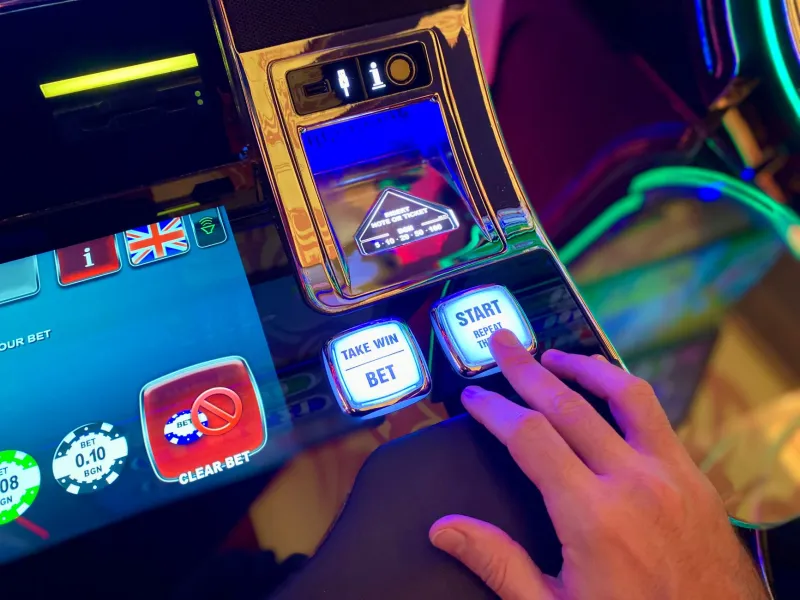
At Mega555, we like a number with a hook. Here is one: 111 spins at $0.05 each costs exactly $5.55. That is not a bankroll plan, and it is definitely not a way to beat a slot. It is a cheap field test — a temperament probe — for answering a narrower question: does this game’s moment-to-moment rhythm match my patience?
US players are buried in claims about volatility, hot streaks, and bonus frequency. Most of those claims are either too broad to be useful or too convenient to trust. A micro-session will not settle any of that. What it can do is give you a controlled, low-stakes read on how a specific game behaves in a specific sitting — and how you react to that behavior. The 555 motif just makes it memorable: five signals, a five-dollar-and-change cap, and a hard stop at 111 spins.
Why 111 spins and $5.55?
The math is the appeal. One hundred eleven spins at a nickel per spin equals $5.55. That is small enough to treat as an entertainment expense, not a loss you need to claw back. The spin count is also long enough to see a few clusters — a run of dead spins, a quick pair of small hits, maybe one bonus trigger — without pretending you have collected a meaningful statistical sample.
One practical note: not every slot lets you bet a nickel. If the minimum is $0.10, the same 111 spins costs $11.10. You can still run the probe, but decide before you start whether that larger cap is worth it. If the minimum is higher than you are comfortable with, pick a different game. Do not raise your budget just to satisfy the bit.
Set the probe before you press spin
A temperament probe only works if you define the rules before the first spin. Pick one game. Pick one stake. Set a hard cap of 111 spins. Do not reload if the budget disappears early. Do not add a side bet or change the stake halfway through, because then you are testing two things at once.
Before you start, open a notes app and create five simple counters. You do not need a spreadsheet. You need a record you can glance at without slowing down the session. Also decide what counts as a hit for your log. The simplest definition is any return greater than zero. A dead spin is a spin with no return at all. A bonus tease is any anticipation animation, scatter near-miss, or visible build-up that does not actually trigger the feature. Log it, but do not assign it meaning yet.
Five signals worth logging
1. Rough hit frequency. Count how many spins returned something. Do not count how much they returned yet. A game that hits often can still pay tiny amounts, and a game that hits rarely can produce occasional larger wins. The probe is about cadence first.
2. Dead-spin clusters. Track your longest run of no-return spins. Short dry spells are normal. Long ones are also normal. The useful part is seeing whether the dry spells feel tolerable to you at this stake and on this game’s speed.
3. Bonus cadence. Note whether the bonus triggered, and roughly when. One trigger in 111 spins is a data point, not a rate. Zero triggers is also a data point. Neither tells you when the next one is due.
4. Tease behavior. Some slots lean hard into anticipation. Scatters land two out of three, symbols expand and stop, music swells. That is entertainment design, not a promise. Log the teases because they affect how the session feels, not because they predict anything.
5. Your own rhythm. At spin 30, 60, and 90, note whether you are engaged, restless, annoyed, or entertained. This is the most honest signal in the whole test. A game can be mathematically fine and still be a bad fit for your patience.
What each signal can and cannot tell you
A hit-frequency count can tell you whether the game feels busy or sparse. It cannot tell you the game’s return-to-player percentage, and it cannot tell you whether the next 111 spins will look similar. Dead-spin clusters can tell you how the session felt. They cannot tell you the machine is due. Bonus cadence can tell you whether this sitting matched your expectations. It cannot establish a bonus rate.
This is where a lot of slot advice goes wrong. It takes a short, noisy sample and turns it into a forecast. Slots use random number generators. Each spin is independent in any regulated US-facing game worth playing. A micro-session is a description of what happened, not a prediction of what will happen. Temperament is a metaphor for rhythm and feel, not a hidden stat you can decode.
A sample log, and the sample-size warning
Imagine a probe that ends with 41 returning spins, a longest dead run of 18, one bonus trigger around spin 87, and four obvious teases. The player notes: restless by spin 70, but the bonus at 87 was fun. That is a perfectly useful result. It says this game’s pace was a little slow for that player at that stake on that day.
Now the warning: another 111 spins could produce 55 returning spins, no bonus, and a completely different mood. That does not mean the first log was wrong. It means the sample is small. Use the probe to compare games and to learn your own tolerance, not to build a system.
The rule after spin 111
Stop. That is the whole discipline. If you liked the game, come back another day with a separate entertainment budget. If you did not, you spent $5.55 on information and a bit of fun. Do not extend the probe to chase a bonus. Do not double the stake because the last 20 spins felt cold. Do not treat a good run as proof that the game is hot.
The 111-spin snapshot is a low-cost way to ask a better question than ‘is this slot hot?’ Ask instead: ‘Does this game’s rhythm fit the way I actually play?’ That answer is worth more than a guess about the next spin. And at Mega555, we would rather you learn it for $5.55 than for $55. Play only where legal, 21+, and keep the cap real.